
East Texas field with Ranunculus.

Research at BRIT

The BRIT research program conceptually includes three main areas:

1. Floristics and Systematics - the Floras program

The discovery, characterization, and classification of plants and vegetation — what kinds of plants exist, where they are found, and their evolutionary relationship to one another. 

Three major floras programs are in operation at BRIT:

ILLUSTRATED TEXAS FLORAS PROJECT
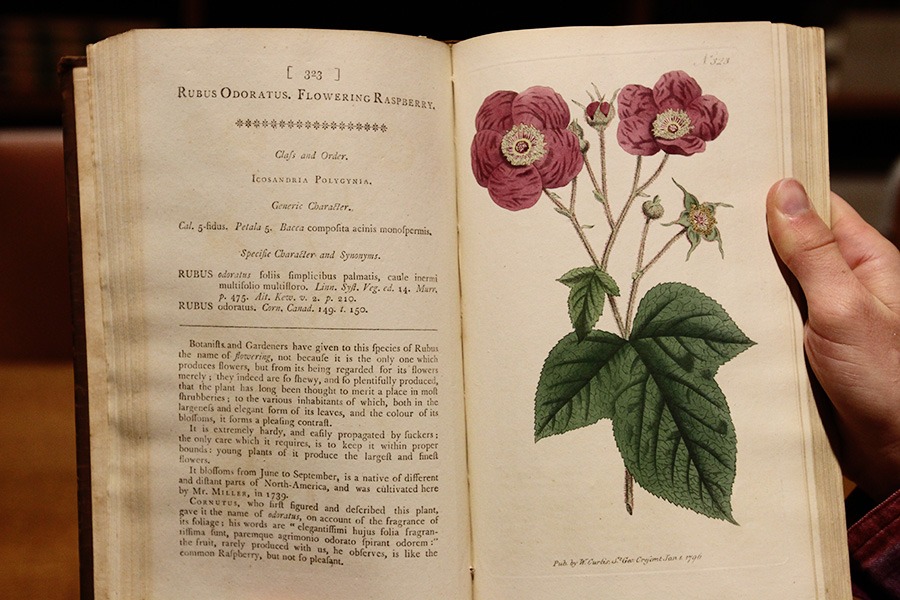
Illustrated floristic treatments useful to both botanical specialists and a more general audience are being produced as a collaborative project of Austin College and BRIT.  The Illustrated Flora of North Central Texas (1999) and The Illustrated Flora of East Texas, Vol. 1 (2006) are published and online. 

The Illustrated Flora of East Texas is a three volume work — Volume 1 includes introductory chapters and treatments of ferns, gymnosperms, and monocots.  Volumes 2 and 3 will cover all dicots.  These together will comprise an illustrated taxonomic treatment of the 3,400 species of vascular plants occurring in the East Texas region.

NEW GUINEA BIODIVERSITY, CONSERVATION, AND LAND USE MANAGEMENT
New Guinea is the world’s largest and highest tropical island and is home to an extremely rich and largely unexplored array of plants, animals, and cultures.  BRIT scientists, in collaboration with staff from national and regional herbaria in Papua New Guinea and Indonesia, are working to document the botanical and ecological diversity, toward better strategies for management and conservation.  Research results will be available through books and online maps, photos, and databases. 

ANDES TO AMAZON BIODIVERSITY PROGRAM
An international, multidisciplinary team of scientists, students, and Peruvians is studying interactions between organisms and their environments in the Andes-Amazon region of southeastern Peru.  Work is done between BRIT and selected field and museum sites in Peru.  AABP plans and protocols are long-term and intensive and include a biodiversity information system (Atrium) to manage data.

Other aspects of research at BRIT are described on the Floristics and Systematics pages, including brief explanations of 'floristics' and 'systematics' and overviews of the BRIT programs. 

2. Plants and People

Investigation and documentation of the use of plants by peoples all over the world for food, fiber, shelter, medicine, and ritual. 

3. Landscape Ecology

A broad view of the relationship between people, plants, and their environments.  This program takes an ecological approach to plant distribution, dealing with issues of sustainable management, ecological restoration, land management, and conservation.

BRIT Research Staff

The BRIT research staff includes botanists with a wide range of background and interests.  See Research Staff & Contact Info or the BRIT Staff Directory for biographical and academic details.  Scientific publications (2000-2007) by BRIT staff.